Motorcycle News from Long Island Sound to the Litchfield Hills and the Quiet Corner
RIDE-CT.com
ph: 860-485-0700
budw
July 2009
A 1937 Brough Superior SS100
Gathering of Brough Superiors
Highlight of Rhinebeck Meet
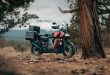
It’s a bike brand that most riders probably don’t recognize – Brough Superior. Only 3,000 or so were ever built, fewer than 1,100 exist today worldwide and there may only be 175 in the entire United States. Seeing eight of these rare, elegant and pricey motorcycles assembled in one location was an unforgettable experience that will not likely be repeated in this lifetime. FULL STORY
OSSAs at Museum of Vintage Trailbikes
Dairyman Turned Curator
Of Trailbike Museum
(Posted June 14, 2009)
By BUD WILKINSON
Tim Sparks and I have been exchanging periodic emails since sometime last year. He lives in Bantam and owns an old 250cc OSSA trail bike. He contacted me about visiting the Museum of Vintage Trailbikes in Cheshire, Mass., intuitively believing that RIDE-CT might enjoy riding up to see the collection of Spanish-made OSSAs and other off-road brands in the private collection that’s displayed on a farm.
“I had met Jim Hoellerich on a couple of the S.M.O.G. rides. I learned about his museum,” explained Sparks, referring to the retired dairyman who assembled the collection. S.M.O.G. is the Spanish Motorcycles Owner Group, a club for enthusiasts of Spanish-built bikes.
Could an invitation to take such a pleasant ride to look at bikes ever be refused? I think not, so we finally met in person at 8:45 a.m. on June 7 at a commuter lot off of Exit 42 on Route 8. My immediate concern was whether the excursion would end prematurely with a roadside breakdown and a long wait for a tow truck. Sparks showed up riding a black and gold 1974 Triumph Trident that he’d acquired last fall for $1,000. This was to be the vintage bike’s first long trip.
Sparks didn’t inspire confidence in the day’s game plan, either, when he wondered aloud whether the bike, which had been sitting for more than 20 years, was sufficiently roadworthy for a roundtrip of roughly 175 miles. A tool bag strapped to his pillion heightened the ennui, but the two-hour ride north proved uneventful.
We arrived to find the grassy parking area behind a barn already full of bikes from not only Massachusetts, but from Vermont, New York, Connecticut and Pennsylvania. Many of the motorcycles showed evidence of being ridden by serious riders. An aging BMW with scuffed luggage, loads of stickers and a Pennsylvania license plate had more than 276,000 miles on the odometer. The Beemer’s owner looked equally broken in.
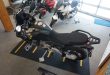
Across the road, which separates some 400 acres of barns, out buildings and pastures, was a farmhouse. On the front lawn were two long rows of mustard and orange OSSAs, which provided a colorful tease of what was to come. Inside the two-story museum were dozens of bikes – OSSAs and Bultacos, a Yamaha and such makes as Penton and Dalesman, unheard of by most street riders. Vintage leathers, boots and trophies from races past were also on display.
OSSA fan Tim Sparks and curator Jim Hoellerich
The museum is a monument to one man’s persistence. Bike restorer and curator Hoellerich doesn’t remember exactly when he acquired the initial OSSA artifacts that got the museum started. It was maybe 20 years ago. “A guy had four of them in town,” he said, recalling that he bought them and was able to salvage enough parts to make two complete bikes.
Hoellerich’s collection grew over time, acquired from “here, there and everywhere,” he said. “A lot of people find me. I’ve got some that people donated.”
He isn’t exactly sure just how many bikes he has. “I’ve got over 100 altogether, I know that,” he said, listing 88 OSSAs, nine Bultacos, two Pentons and a Yankee that he knows he has for sure.
Why’d he do it? Why’d he build a museum in such an out of the way place? For the company that it has brought him. “Everybody said, ‘You’re going to get lonesome when you retire,’” said the 75-year-old Hoellerich, recalling that he expected that he’d draw visitors from the area. Instead, trail (and other) riders worldwide make his museum a destination. He gets a couple-hundred annually.
Last Sunday, it was a group of S.M.O.G. members that ascended Henry Wood Road to tour the museum and enjoy the burgers and hot dogs that Hoellerich provided his guests, one of whom was Bob Hogan, the New England Trials Association champion of 1965 and the owner of Hogan’s Cycle Shop in Agawam, Mass.
Interior of Museum
"It’s an eye-opener,” said Hogan of the museum, suggesting that it’s a great place to visit for any rider (on-road or off-road) who “wants to see what a new motorcycle looked like back in the ‘60s and ‘70s.”
That’s because Hoellerich has restored most of the bikes in his museum to pristine condition.
Said Sparks, “I was amazed. I’m very impressed with it – the condition of the bikes really and the fact that it’s a private collection, one guy’s passion.”
So how does one gain access to Hoellerich’s museum? Just pick up the phone. “I’m open whenever you call. I tell everyone to call ahead,” said Hoellerich.
The number is 413-743-0248. It’s worth the trip.
By the way, the trip back was uneventful, too. Sparks’ old Triumph even managed to roll past 5,000 miles on the odometer. Even though it’s 35 years old, it’s barely broken in. Now I need to take him up on his offer to let me ride his OSSA.
An OSSA on display
More OSSAs in front of museum
Bailey rebuilds a Yamaha RD350
(Posted May 24, 2009)
There’s a skill to negotiating, and it helps immensely if you’re willing to walk away from a potential deal. Bill Bailey of Middlebury had the knack the day that he to went to look at a bike that was for sale in Kent. The owner was asking $500 for a worn 1974 Yamaha RD350. Bailey took one look at it, saw that it was missing its chrome fenders as well as a seat and decided it wasn’t the one for him. FULL STORY
Bill Bailey and his 1974 Yamaha RD350
Art to Motorcycle Tins
(Posted May 24, 2009)
Dave Pope of Danbury, whose company is called Deepline Arts, has been turning motorcycles into art for more than three decades. “I started back in ’78, up underneath the porch. My first custom, I made one hundred bucks. It kept going from there,” he recalled. FULL STORY
Dave Pope at work
New England Gets
Indian Dealership
(Posted May 31, 2009)
New England gets its first Indian dealership on June 11 when Indian Motorcycle of New England opens in Worcester, Mass. The Indian demo truck from the factory in Kings Mountain, N.C. will visit on June 12 and 13. For more information, visit indianmotorcycleofne.com.
NEW “SHOP” IN WINSTED
When one-time Harley dealer and lifelong Harley mechanic Keith Bruno decided to open a new motorcycle repair and restoration shop, he looked at possible locations in Bridgeport and Hudson, N.Y. before settling on Winsted. Two factors came into play: He has a sister who lives in Norfolk and “Route 44 is a destination road for veryone,” he said. Bruno has now set up shop at 760 Main Street for the new business that he’s simply calling The Shop.
KIDS VEHICLES NOW OK TO SELL
Dirt bikes and quads aimed at kids are now back in dealer showrooms. Dealers such as Adams of Oakville, Willow’s Motorsports in Cheshire and Canton Cycles in Winsted were forced to put them in storage following a Feb. 10 sales ban on goods containing lead that are aimed at kids 12 and under. On May 12, the federal Consumer Product Safety Commission issued a “stay of enforcement” on the ban that will be in effect through May 1, 2011, which means the bike and quads are being sold again.
Cliff's Adding Indian
to BMW, Ducati Lines
(Posted July 5, 2009)
After mulling the opportunity for months, Cliff’s Cycle Revolution in Brookfield has finally decided to add the revived Indian brand to the dealership that already sells BMW and Ducati motorcycles. “Bikes will be here by mid-July,” general manager Bob Rosen reported last week.
Cliff’s will be the second Indian dealer in New England. It joins Indian Motorcycle of New England in Worcester, Mass., which opened a month ago. “We have not done this casually. We feel it fits us by broadening our product offering,” said Rosen.
Adding Indian expands the dealership into the premium cruiser market. BMW specializes in sport and touring bikes, while Ducati is known for its sport bikes.
“It also fits because the other two brands we sell are premium, top-of-their-game brands,” Rosen added. “This complements our product offering and in no way competes with or detracts from our current brands.”
Based in Kings Mountain, N.C., Indian offers four variations of the Chief model, ranging in price from the $26,999 Chief Standard to the $35,499 Chief Vintage. All are powered by a 105-cubic-inch, air-cooled V-twin engine.
By landing Cliff’s as a dealer, Indian gains access to an affluent base of potential customers in Fairfield and Westchester (N.Y.) counties. “They were looking for a premium level dealer to represent them. They very much wanted to put a dealer in this area,” said Rosen.
While a previous attempt to bring back the Indian brand in the early 2000s failed with the company going bankrupt in 2003, Rosen believes the latest Indian effort will succeed. “They re extremely well capitalized. We don’t think they’re going to run out of money, which is what happened to the last company,” he said.
Rosen also noted that the senior management team of Indian is made up of executives who know their way around motorcycles. “Most people were hired from senior positions at Harley-Davidson,” he said.

RIDE-CT by Bud Wilkinson
A Tune-Up for Experienced Riders
(Posted July 5, 2009)
It was at a surprise birthday party for a friend a few weeks ago that an aging baby boomer – it takes one to know one – approached me. His leather vest marked him as a rider, giving me a clue as to what he was going to ask even before he inquired if I were the guy responsible for RIDE-CT.
We chatted over mini-pizzas and he introduced his wife. I learned how they quit riding for nearly two decades to raise a family, but resumed the recreation now that they’re empty nesters. He’s at the controls and she rides pillion. I won’t divulge their names or where they live. By withholding these facts, he can more easily represent any returning rider, maybe someone you even see in the mirror every morning.
As we talked, the wife volunteered that they’d had some close calls recently. He’d run some traffic lights as they changed from yellow to red, making her nervous. He grumped in response that rolling on the throttle of his full-sized Harley was safer than abruptly braking.
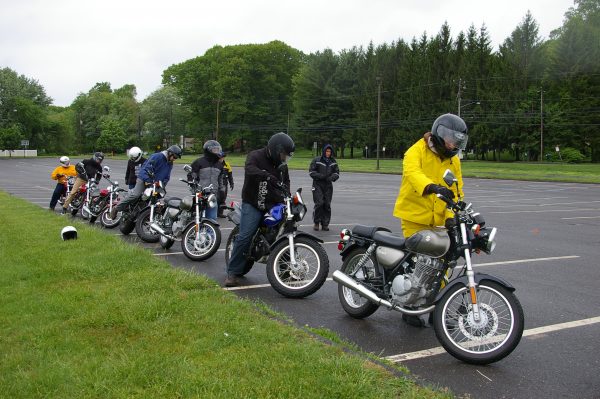
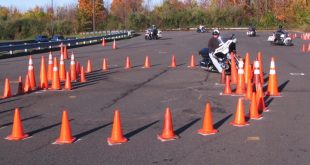
It was at this point that I suggested that he take the half-day Experienced Rider Course offered by the state; that it would be useful in polishing his rusty skills, would rid him of any bad habits he might have, and would better acquaint him with his bike in a safe environment.
The response was predictable. The wife immediately exclaimed that this was a great idea. Hubby remained silent. Being a guy and having a stubborn nature myself, I could practically hear his thoughts: “I don’t need any stupid course. I’ve ridden for years and I damn well know what I’m doing.”
Sorry, sir, but you don’t. You’re no longer young. Your reflexes aren’t what they used to be. And the bikes of today are nothing like the ones of 20 or 30 years ago. They’re more powerful, generally heavier and have more responsive brakes than what you learned on. They are more cars on the highways, too, and more gadgets to distract drivers. Ever have a driver talking on a cell phone fail to see you?
Having taken the ERC course twice myself in the past five years – it’s recommended whenever you get a new bike because all bikes handle differently – I pressed the issue, explaining that the classes are upbeat, fun and encouraging. They’re usually filled with seasoned, safety conscious riders who realize the importance of constantly honing their riding techniques and their survival skills.
While the wife was ready to sign up her spouse on the spot, hubby had his heels dug in. His lack of response communicated more than any words.
Riding instructor John Purdy Jr., who oversees the classes at Naugatuck Valley Community College in Waterbury and at Cliff’s Cycle Revolution in Brookfield, wasn’t surprised when I told him of the encounter. The guy’s less than enthusiastic response is common among returning riders, he said. “They think that there’re fine because they’ve had their license for 30 or 40 years: ‘I must being doing something right. I’m still here.’”
Purdy said a more pertinent question such pig-headed riders need to ask themselves isn’t how long they’ve been riding but how many miles have they ridden? Often, he said, these riders venture out maybe once or twice a month and rack up a maximum of 2,000 to 3,000 miles a year, an insufficient number to become truly proficient.
“These guys are adamant that they don’t need the course. I’ll ride with them two miles – on an average road with a couple of corners – and I’ll know they need the course,” emphasized Purdy. They’re the riders who don’t look through the turns, who brake on curves and use their rear brake instead of the front.
Purdy said he, too, thought he was a good rider until he took the more intensive course for instructors back in 1996 to become certified to teach the Basic Rider Course and the ERC. “It made me such a better rider, I couldn’t believe it,” he said.
The irony with the ERC is that the riders who need the course the most, the ones who wrinkle their noses as if confronted by bad kitty litter when it’s suggested that they take it, are the least apt to enroll. The smart riders who least need the instruction are the ones who do sign up. “Most of the guys are ‘repeat offenders.’ They come back every year,” said Purdy, because they know the value of making sure their skills are in as good shape as their bikes.
I have no problem admitting that I failed the ERC the first time I took it, primarily because I hadn’t ridden enough at the time. I was still a newbie. I was so flustered and embarrassed over flunking that I rode halfway home with the chinstrap on my helmet undone. Quickly, though, I realized that all that I had learned was far more valuable than any certificate for passing the class.
Purdy said that’s the general reaction of anyone who takes the ERC. “They come to you and say, ‘I can’t believe how much I learned.’ I’ve had couple people say, ‘I can’t believe I’m still alive.’ I’ve actually heard people say that.”
So, sir, if you happen to read this column, here’s the deal: I’ll pay the $85 for you to take the ERC. If, upon completion, you can honestly say you didn’t learn anything, you won’t have to pay me back. Just know that I’ll have change for a Ben Franklin waiting.
I’ll also bet that you (and your wife) will have more fun riding after taking the course because you’ll be a more confident and safer rider.
For info about the rider education courses across Connecticut, visit ride4ever.org.
Addendum: After this story appeared on June 27 in The Republican-American, I waited for a phone call or email, but if the phone doesn’t ring, you can’t answer it. And if the email inbox is empty, you cannot reply.
Yankee Harley-Davidson
Gets New Ownership
(Posted May 24, 2009)
The name of Yankee Harley-Davidson hasn’t changed, but the motorcycle dealership in Bristol did experience an ownership change earlier this month.
Patti and Aaron Patrick bought out previous owner “Harley” Bob LaRoche on May 1 and immediately began making extensive changes that are evident even at a distance. A large “Under New Management” banner on the front of the building declares that the dealership is now open seven days a week, having previously been closed on Sunday and Monday.
Patti and Aaron Patrick
The Patricks, who are husband and wife, also quickly boosted bike inventory and increased the staff size from 14 to 25 employees. Additional hires are expected in both the sales and service departments, and they’re also planning a couple-dozen promotional events to boost traffic over the coming months. FULL STORY
Dealers/Businesses Guide
Looking to buy a new or used bike or need to get your ride fixed? The Dealers/Businesses page has a comprehensive list along with links. LIST
RIDE-CT.com
ph: 860-485-0700
budw